
You are using an out of date browser. It may not display this or other websites correctly.
You should upgrade or use an alternative browser.
You should upgrade or use an alternative browser.
Fun and Frolic With Long-Term Love
- Thread starter Bluebird
- Start date

Bluebird
Well-known member
The combo of ibuprofen and Tylenol at the same time has stopped working. The pain is pretty bad. I took another tramadol and all it did was make me feel glazed. Ugh I’m a fucking donut right now!
I called the surgeon this morning and they just called me back and said to take the Tylenol, ibuprofen and TWO tramadol at the same time, so at 3 pm today I will try that.
The incision itself only hurts when going from sitting to standing or laying down to sitting, like a burning feeling and then it disappears fairly quick. This constant pain is cramping and aching across my entire abdomen, pain in my hips and across my lower back.
I was crying this morning and MisterMoonbeam says he really doesn’t see what I could do any different. I’m following all of the instructions and the pain level is not decreasing. The guys moved a side chair into my bedroom yesterday so I could be someplace other than the bed when sitting up but that didn’t really help.
I called the surgeon this morning and they just called me back and said to take the Tylenol, ibuprofen and TWO tramadol at the same time, so at 3 pm today I will try that.
The incision itself only hurts when going from sitting to standing or laying down to sitting, like a burning feeling and then it disappears fairly quick. This constant pain is cramping and aching across my entire abdomen, pain in my hips and across my lower back.
I was crying this morning and MisterMoonbeam says he really doesn’t see what I could do any different. I’m following all of the instructions and the pain level is not decreasing. The guys moved a side chair into my bedroom yesterday so I could be someplace other than the bed when sitting up but that didn’t really help.
Bluebird
Well-known member
Holy shit. I guess we have hit upon the right combo of meds finally. I feel calm, and there’s no pain at the moment. I am definitely high but it’s so worth it to feel no pain finally!
I woke up early today and took seven pills, and then 30 minutes later, MisterMoonbeam came in to help me. My wound vac has now been removed! The worst part was that a small portion of the tape definitely had hair under it. lol
I am exactly one week post surgery, and I think I have finally found my calm spot! Right now I feel no pain and I’m high AF. I’m keeping my fingers crossed that I get through the day like this - if I can maintain this feeling, it will absolutely be my best day so far.
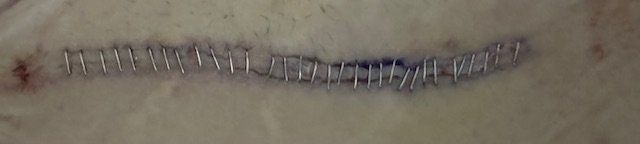
With the wound vac removed, I can see my incision clearly. It looks healthy! It is half the size I was originally told to expect, so I am okay with it. Very relieved, actually! I have thirty-two staples in total. It looks good.
Seriously, I hope the rest of my recovery is like this. Not having the pain is amazing.
I woke up early today and took seven pills, and then 30 minutes later, MisterMoonbeam came in to help me. My wound vac has now been removed! The worst part was that a small portion of the tape definitely had hair under it. lol
I am exactly one week post surgery, and I think I have finally found my calm spot! Right now I feel no pain and I’m high AF. I’m keeping my fingers crossed that I get through the day like this - if I can maintain this feeling, it will absolutely be my best day so far.
With the wound vac removed, I can see my incision clearly. It looks healthy! It is half the size I was originally told to expect, so I am okay with it. Very relieved, actually! I have thirty-two staples in total. It looks good.
Seriously, I hope the rest of my recovery is like this. Not having the pain is amazing.
Bluebird
Well-known member
I’m feeling positive right now about my recovery. Every day is a little better. I was able to poop again today, after 2 days of nothing (I think the narcotic had me backing up). The pain is managed.
I’m writing this from the sunroom. I need to do budgeting and bills today. I had MisterMoonbeam pay the mortgage at lunchtime but there is more due than that at the moment since tomorrow is the beginning of the month.
BugGirl came by yesterday and watered plants and scooped litter. Tonight I’m having the guys do some actual cleaning, even though it’s MisterMoonbeam’s birthday. lol Tomorrow I have a good friend stopping by for litter again, and TheEngineer is going to play some video games with me, I think.
True story, the gym bro that I never actually dated but we just flirted with - he was supposed to be in a theater production this summer! (Not one DarkKnight is involved in.) Well, he dropped out last minute for some reason, and we got a request to host the new lead of the play this coming week. It’s Tech Week and the actor is from out of town. He’s in a wheelchair and I guess our house is the most disability-friendly. So even though I’m slowly pulling myself back together, this house needs to be brought into some sort of shape as well for a guest!
Both guys have reiterated that they will handle things and I just need to continue to focus on healing. I’m like, okay! So we will see how this shakes out.
I’m writing this from the sunroom. I need to do budgeting and bills today. I had MisterMoonbeam pay the mortgage at lunchtime but there is more due than that at the moment since tomorrow is the beginning of the month.
BugGirl came by yesterday and watered plants and scooped litter. Tonight I’m having the guys do some actual cleaning, even though it’s MisterMoonbeam’s birthday. lol Tomorrow I have a good friend stopping by for litter again, and TheEngineer is going to play some video games with me, I think.
True story, the gym bro that I never actually dated but we just flirted with - he was supposed to be in a theater production this summer! (Not one DarkKnight is involved in.) Well, he dropped out last minute for some reason, and we got a request to host the new lead of the play this coming week. It’s Tech Week and the actor is from out of town. He’s in a wheelchair and I guess our house is the most disability-friendly. So even though I’m slowly pulling myself back together, this house needs to be brought into some sort of shape as well for a guest!
Both guys have reiterated that they will handle things and I just need to continue to focus on healing. I’m like, okay! So we will see how this shakes out.
Bluebird
Well-known member
So I think I may have pulled an internal stitch.  I hurt really fucking bad and I am upset at myself. Basically last night I stupidly watched some fail video compilation on Reddit and couldn’t stop laughing. Laughing is definitely on the “do not fucking do” list! It hurt while it was happening, and now I am continuing to be in pain. I have a very sharp pain on my lower right side and none of the meds are making it feel better unfortunately.
I don’t know what to do about it, honestly. Today I felt on and off nauseous and at one point I felt like I had a fever but the thermometer said that wasn’t the case. I definitely am having hot flashes randomly and then I find myself freezing and not able to get warm. Ugh. That’s all like from not having ovaries though, I think.
Up until the hysterical laughter last night, I’d say that every day was a little better than the last. I can’t say that now!
I didn’t see TheEngineer today at all, but my friend did come over and she scooped litter boxes and swept the sunroom too. We talked for a bit. It was good to see her!
Today I’m binging season 6 of the Circle and sleeping a lot.
I hurt really fucking bad and I am upset at myself. Basically last night I stupidly watched some fail video compilation on Reddit and couldn’t stop laughing. Laughing is definitely on the “do not fucking do” list! It hurt while it was happening, and now I am continuing to be in pain. I have a very sharp pain on my lower right side and none of the meds are making it feel better unfortunately.I don’t know what to do about it, honestly. Today I felt on and off nauseous and at one point I felt like I had a fever but the thermometer said that wasn’t the case. I definitely am having hot flashes randomly and then I find myself freezing and not able to get warm. Ugh. That’s all like from not having ovaries though, I think.
Up until the hysterical laughter last night, I’d say that every day was a little better than the last. I can’t say that now!
I didn’t see TheEngineer today at all, but my friend did come over and she scooped litter boxes and swept the sunroom too. We talked for a bit. It was good to see her!
Today I’m binging season 6 of the Circle and sleeping a lot.
Bluebird
Well-known member
Ugh I spent AN HOUR on the toilet shitting. I think I crapped my entire colon clean. I haven’t had any stool softeners or laxatives in a couple of days. Clearly this needs to be remedied, omg.
Apparently this has become a journal about my poops.
Today I just took one tramadol every 8 hours, and each time with just the ibuprofen or with just the Tylenol. It was hurty, but manageable. Just now I took my overnight dosage, and it was no narcotic at all - just 800 mg of Ibuprofen. I’m not sure if this is wise. I’m waiting a bit to see if I start having too much pain.
I’m tired. I started the second book of the 3 Body Problem series - Dark Forest. I’m enjoying it.
Apparently this has become a journal about my poops.
Today I just took one tramadol every 8 hours, and each time with just the ibuprofen or with just the Tylenol. It was hurty, but manageable. Just now I took my overnight dosage, and it was no narcotic at all - just 800 mg of Ibuprofen. I’m not sure if this is wise. I’m waiting a bit to see if I start having too much pain.
I’m tired. I started the second book of the 3 Body Problem series - Dark Forest. I’m enjoying it.
Bluebird
Well-known member
The overnight experiment was terrible - I had a fitful time of it, and the next morning when I did take the Tramadol, it took a while for my pain to settle out. Last night I was tempted to try again with just Advil, but an hour into it I started really feeling the pain, and both of my guys encouraged me to not be stupid.
Ugh.
My body temperature is literally a hot mess as well. I’m really struggling with keeping comfortable. Up to this point, the cooling pillows have offered some relief, but it wasn’t enough. Someone on Facebook made a comment about a cooling blanket, and I remembered that SirGawain had bought me one a while back. I never used it because my plan was to take it to his house, and then he had that year of not cleaning his place so I didn’t stay overnight.
Well, I located the blanket and used it yesterday. OMG It’s an absolute game changer! It’s a two-sided cooling blanket and it is AMAZEBALLS. I highly recommend it - https://a.co/d/h2nAghQ - last night was 100% better.
I am anxious to visit the surgeon in a couple of days for my first post-op appointment. I want to get the official “all clear” on the cancer diagnosis, and I want to know how much longer I will have to have these staples in me! They’re super uncomfortable. Online says usually 14-21 days? Well Thursday is 14! The entire area is still very tender.
I also really want to get my life started, post-surgery. I want to get on HRT and I need to get on with my diabetes management. I feel positive about making changes, and I am optimistic! I’m excited about mapping all of that out.
Ugh.
My body temperature is literally a hot mess as well. I’m really struggling with keeping comfortable. Up to this point, the cooling pillows have offered some relief, but it wasn’t enough. Someone on Facebook made a comment about a cooling blanket, and I remembered that SirGawain had bought me one a while back. I never used it because my plan was to take it to his house, and then he had that year of not cleaning his place so I didn’t stay overnight.
Well, I located the blanket and used it yesterday. OMG It’s an absolute game changer! It’s a two-sided cooling blanket and it is AMAZEBALLS. I highly recommend it - https://a.co/d/h2nAghQ - last night was 100% better.
I am anxious to visit the surgeon in a couple of days for my first post-op appointment. I want to get the official “all clear” on the cancer diagnosis, and I want to know how much longer I will have to have these staples in me! They’re super uncomfortable. Online says usually 14-21 days? Well Thursday is 14! The entire area is still very tender.
I also really want to get my life started, post-surgery. I want to get on HRT and I need to get on with my diabetes management. I feel positive about making changes, and I am optimistic! I’m excited about mapping all of that out.
Last edited:
Bluebird
Well-known member
This morning I decided to experiment and I ONLY took 800 mg of Advil. Things were okay for a while. I didn’t go back to sleep in the morning as per usual though, because TheEngineer came to visit me at 10 am. So I stayed awake most of the day. We had a good visit and we talked a lot about sci-fi topics and shared interests.
Around 2 pm I had been suffering a bunch from massive painful bouts of gas. I ended up spending like 40 minutes on the toilet, and when I finally pooped, it was quite terrible. By the time TheEngineer left at 4 pm - I was exhausted and I was asleep before his truck left my driveway, I think!
I woke up at 5:30 in massive pain, and at that time I took more Advil, combined with 1000 mg of Tylenol. The pain did not decrease, and MisterMoonbeam cajoled me into taking Tramadol. I was pretty upset, because my goal to try and step back from the pain meds, but it was clear that I’m still holding on to a LOT of pain. It’s now 11:30 pm and I am still in pain. I’m feeling glazed now, but still it isn’t the greatest.
Around 2 pm I had been suffering a bunch from massive painful bouts of gas. I ended up spending like 40 minutes on the toilet, and when I finally pooped, it was quite terrible. By the time TheEngineer left at 4 pm - I was exhausted and I was asleep before his truck left my driveway, I think!
I woke up at 5:30 in massive pain, and at that time I took more Advil, combined with 1000 mg of Tylenol. The pain did not decrease, and MisterMoonbeam cajoled me into taking Tramadol. I was pretty upset, because my goal to try and step back from the pain meds, but it was clear that I’m still holding on to a LOT of pain. It’s now 11:30 pm and I am still in pain. I’m feeling glazed now, but still it isn’t the greatest.
Last edited:
Bluebird
Well-known member
It’s my understanding that I’m not supposed to be taking the Tramadol willy-nilly; my surgeon doesn’t want me taking two at a time if I can do without. So, uh, the way to figure that out is to stretch my time between doses. That’s not me being stupid, it’s trying to figure out what schedule works.I don't understand people who won't take their prescribed pain pills. You had tumors for ages and it really stressed out your insides. Your nerve endings are sensitized. Your guys told you you are being stupid, BB. Be smart.
Clearly I left it for too long! So far this morning I haven’t taken the Tramadol but I think I will soon - I need to shower and I haven’t had those be pleasant experiences yet.
I'm not sure on this. Although pain meds are prescribed, every person is different in their tolerance and need. I have a very high tolerance so on two times (UK based, they are very careful here) I have been given them I weaned off very quickly.stressed
BB I hope things feel better soon xx
SEASONEDpolyAgain
Well-known member
So most people understand this when it comes to antibiotics and that is why they are more likely to adhere to the times they are prescribed. But basically, to keep the amount of analgesia in your system at a level that actually provides sustained pain relief, you have to take it regularly because you metabolise the medication.
That is what I was trying to explain earlier about the difference between preparing for what you know will be relatively short term pain (like a headache) and surgical recovery. With the latter, the aim is to keep your analgesia within a theraputic range over a sustained period. It is safer because it allows the surgeons to monitor for unexpected pain which could mean infection or other complications, and it means they can hold back from prescribing unnecessarily strong painkillers when better compliance would suffice.
Bluebird
Well-known member
I spent the day on just Advil and Tylenol and did just fine. He really did tell me to try to NOT use the narcotic so much if I can help it. He did prescribe me two at a time but he told me to be cautious with it and only do so if needed. So that’s what I’m going to do. Clearly I don’t want to be in pain, but I’m not going to take the max dose around the clock. Honestly if it worked to actually take away the pain I would, but all it seems to do is make me more tired. I don’t think it’s the correct medicine for me, but I’m now almost two weeks post op so I am very certain he’s not going to be prescribing me different pain meds.
I spent the day reading and dozing and didn’t end up showering yet. I did just take a single tramadol and I’m waiting for it to make me feel zonked so I can shower and then head to bed for the night. My guys want me to take it at night because my pain seems to make me more uncomfortable in the evening, which I guess is a thing.
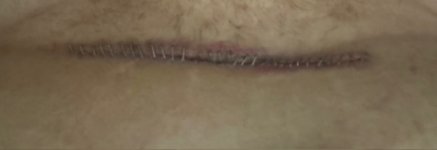
My incision is looking good but it does tweak every now and then and the heaviness in the area is just exhausting. I can’t wait to see what the surgeon says about taking the staples out. I think it’s closing well on the ends but the center is still needing more time. I’m hoping he yanks them all out.
I spent the day reading and dozing and didn’t end up showering yet. I did just take a single tramadol and I’m waiting for it to make me feel zonked so I can shower and then head to bed for the night. My guys want me to take it at night because my pain seems to make me more uncomfortable in the evening, which I guess is a thing.
My incision is looking good but it does tweak every now and then and the heaviness in the area is just exhausting. I can’t wait to see what the surgeon says about taking the staples out. I think it’s closing well on the ends but the center is still needing more time. I’m hoping he yanks them all out.

I looked it up. After a good year or two of the massive tumors BB had, with adhesions to her intestines, etc., there is plenty of residual nerve pain, inflammation, perhaps muscle spasms, and the like, happening in her pelvis. The hysterectomy didn't just suddenly make her pelvis an area of health and light! So much healing needs to happen.I'm not sure on this.
Taking the properly diagnosed amount of pain medication will make BB less stressed in general, and better able to move around. She can do a bit more walking, which brings oxygen to her surgical site, promoting healing. She can more easily shower, which is better for her hygiene and comfort, which impacts the speed of her healing.
Taking tramadol for a few weeks until she is comfortable, as prescribed, will not make her a lifelong addict. It's not oxycontin. Yes, she shouldn't take an overdose, and I know she's experimenting with taking the lowest possible dose, but night after night she doesn't take enough and is in terrible agony, as she reports here, and then she's miserable and crying. It's all written here. Sometimes it's hard to see the forest for the trees.
I've had two abdominal surgeries myself. I am not talking out of my ass, here. I have a high tolerance for pain, as well. I have had a cesarean section, two natural childbirths (planned at home, no painkillers, no epidurals), and later, Stage 1 endometrial cancer requiring a hysterectomy and six months of chemotherapy. So this just hits very close to home, to see her suffering unnecessarily.
Bluebird
Well-known member
I looked it up. After a good year or two of the massive tumors BB had, with adhesions to her intestines, etc., there is plenty of residual nerve pain, inflammation, perhaps muscle spasms, and the like, happening in her pelvis. The hysterectomy didn't just suddenly make her pelvis an area of health and light! So much healing needs to happen.
Taking the properly diagnosed amount of pain medication will make BB less stressed in general, and better able to move around. She can do a bit more walking, which brings oxygen to her surgical site, promoting healing. She can more easily shower, which is better for her hygiene and comfort, which impacts the speed of her healing.
Taking tramadol for a few weeks until she is comfortable, as prescribed, will not make her a lifelong addict. It's not oxycontin. Yes, she shouldn't take an overdose, and I know she's experimenting with taking the lowest possible dose, but night after night she doesn't take enough and is in terrible agony, as she reports here, and then she's miserable and crying. It's all written here. Sometimes it's hard to see the forest for the trees.
I've had two abdominal surgeries myself. I am not talking out of my ass, here. I have a high tolerance for pain, as well. I have had a cesarean section, two natural childbirths (planned at home, no painkillers, no epidurals), and later, Stage 1 endometrial cancer requiring a hysterectomy and six months of chemotherapy. So this just hits very close to home, to see her suffering unnecessarily.
Today was actually pretty good with just one tramadol taken before showering and then bed. (I had regular dosing of Advil & Tylenol tho.) I actually haven’t slept yet, as DarkKnight & I decided to watch 3 Body Problem together. I had finished the series but he hadn’t started, and after finishing the first 2 books - and being well into number 3 - I was interested to see it again. We watched three episodes and he’s now snoring, and I stayed up to read more of the third book.
I’m on my back so there’s not much pain at all. Maybe a 2? If I turn over to my side that won’t be the case - okay stopped typing to do that and to shuffle my cooling blanket, ooh - and now it’s at maybe a 4? but definitely not all over. I have a distinct burning sensation at the center of my staples but like always there is a constant ache on both of my hips.
The truth is I would be completely out of tramadol several days ago if I had taken it every 8 hours and doubled the amounts up. I know my doctor did not intend that and he was concerned at me taking so much, but yeah, my pain tolerance is close to zip and always has been. You also absolutely underestimate - or maybe don’t take into consideration - how fucked up my life has been surrounding addiction. I have no desire at all to take any sort of pills if I can make it through without them. I can 100% say I would rather cry myself to sleep for a month in pain than have to worry about needing pills long term. There’s some stuff I have never shared here, but I think I have posted about other things as I worked through them - PunkRock’s alcohol addiction, my daughter’s drug addiction, my younger brother’s decade in recovery from heroin and then relapse, a large number of my high school friends ending up ODing or in prison for drug use, the people I helped every day at my Blessing Box who were all over the place in their own misfortunes with addiction.
When I see my doctor in a few hours later this morning,if he’s upset that I’ve not taken more Tramadol, well, he and I can discuss it. If he thinks my healing has been delayed because I haven’t been consistent these last couple of days with the Tylenol & Advil timing, I will be open to talking about it. But I do think I’ve done the best that I possibly can given my fear of medication in general and how it effects me.
One thing that I learned yesterday when TheEngineer was here was when he came to visit me while I was in the hospital, that he chatted with BugGirl for quite a bit. I remember that they were here some of the time together but it’s vague. What I DO remember is that I had a morphine button and I was frustrated that hitting it did nothing for my pain.
I was talking to TheEngineer about that fact and he said that every time I hit it I passed right out, like instantly, and then came to a couple of minutes later crying, in pain. And then I’d be miserable until I would remember that the button existed, and I’d hit it again, rinse and repeat.
Which was news to me. MisterMoonbeam also told me he was up the entire first night I was in the hospital, because he was concerned about my breathing after hitting the button. And then the second night I was in massive amounts of pain and the nurse called in to the surgeon to request different meds to help me. Which I think I got a shot of something but then he also freed up more morphine? I would have to look at the billing statement to remember for sure.
So I definitely don’t think I am the most reliable narrator at this point with my pain. Should I take more meds so I forget what’s up? I don’t know. I don’t like the sound of that. Maybe not gobbling down more is impeding things. I just know that both options of taking more and taking less terrifies me.
I’m now 14 days past the surgery and I’m hoping a 6 week total recovery period will be doable. If it’s not - that’s okay. This is my year of rest. I’m going to spend every week focusing on healing, whether it’s this hysterectomy recovery, getting my diabetes under control, continuing the weight loss & downward trend of my A1C, and meeting with my therapist at least twice a month to keep up with my mental health.
I feel so incredibly grateful and relieved that I’m not going to be looking at chemo following all of this, and that the planned 12-inch incision and butchering of my body didn’t happen. I will take whatever time it takes to get through this!
Glad to hear it. You are two weeks post surgery so you are definitely healing.Today was actually pretty good, with just one tramadol taken before showering and then bed. (I had regular dosing of Advil & Tylenol.)
Do you use a heating pad or ice pack?
Do you clutch a pillow when you lie on your side or sit on the toilet?
Are you getting up to walk around the house and yard, or just lying in bed, except to go to the bathroom?
If your pain is at a 4 if you move at all, does that make you avoid moving at all? That can cause blood clots, to lie in bed and not move for hours and days on end. Have you discussed this with a nurse or doctor?I’m on my back, so there’s not much pain at all. Maybe a 2. If I turn over to my side that won’t be the case... I stopped typing to do that. Ooh - and now it’s at a 4. I have a distinct burning sensation at the center of my staples... there is a constant ache on both of my hips.
That doesn't matter, because a doctor can order a refill. You should be discussing this with your doctor. I don't mean to intrude, but this is a public blog and people are reading it, and if I am concerned, I know others are too.The truth is, I would be completely out of tramadol several days ago if I had taken it every 8 hours and doubled the amounts up.
You should be advocating for the proper amount of pain relief with your doctor. It's not about him being upset, it's about your pain levels being manageable enough for you to rest comfortably, and also get up and walk around. After my hysto I was told to attempt walks outside as soon as possible, certainly by two weeks post-surgery. I did take a walk around the block at two weeks and it was too soon. I could barely get home. I had to stop and lean against trees a few times. So I waited another week before trying to do another 1/3 mile walk! By then I was okay. But of course, I didn't have massive fibroids removed. I am not saying our situations are the same.I know my doctor did not intend that. He was concerned at me taking so much.
However, I was walking around the house quite a bit and doing okay in that time period. I was recovered by six weeks and started chemo then. That's when the "fun" really started.
My pain tolerance is close to zip and always has been.
Yes, we all have close family members and friends who have suffered with addiction. One of my daughters is a recovering substance abuser, in fact. My only blood nephew died at 32 from issues relating to his mental state and addictions.You also absolutely underestimate, or maybe don’t take into consideration, how fucked up my life has been surrounding addiction. I have no desire at all to take any sort of pills if I can make it through without them. I can 100% say I would rather cry myself to sleep for a month in pain than have to worry about needing pills long term. There’s some stuff I have never shared here, but I think I have posted about other things as I worked through them-- PunkRock’s alcohol addiction, my daughter’s drug addiction, my younger brother’s decade in recovery from heroin and then relapse, a large number of my high school friends ending up ODing or in prison for drug use, the people I helped every day at my Blessing Box who were all over the place in their own misfortunes with addiction.
 For some reason, I will still take medication properly when I am in severe pain and need to get through my day. I understand the risks of addiction to oxycontin and other narcotics, but I do take my tramadol properly for my arthritis or I literally wouldn't be able to function. (I take all my prescribed meds properly, as every aging person should.) I have to live my life.
Anyway, you are two weeks post surgery, so you're over the worst of it. However, your nerves, muscles, connective tissues, intestines, etc., have been through the wringer because of your original condition.
I am glad you're having that follow-up and I hope the talk is productive. I hope you have not delayed your recovery too much. A good doctor shouldn't become "upset," to the point of yelling at you or disrespecting you, but if your fears and behavior have really held things up, and you're not walking, and haven't been using heating pads or ice for non-medical pain relief and to reduce inflammation, he should encourage you to do so, despite your fears and traumas.When I see my doctor in a few hours later this morning, if he’s upset that I’ve not taken more Tramadol, well, he and I can discuss it. If he thinks my healing has been delayed because I haven’t been consistent these last couple of days with the Tylenol & Advil timing, I will be open to talking about it. But I do think I’ve done the best that I possibly can given my fear of medication in general and how it effects me.
I hope you get your staples out. Maybe he can take them out and replace them with steri-strips!
Tramadol doesn't make you unconscious or forgetful like morphine, Dilaudid, etc. I am not talking about taking 2 pills every 6 hours. I am glad you've been at least taking one before bed for a couple days now. You need your sleep!I don’t think I am the most reliable narrator with my pain. Should I take more meds so I forget what’s up?
The fact that you'd say "gobbling down more" drugs is concerning. Physician-monitored pain relief is not gluttony, addiction, life-threatening, a crime or a vice or a sin. There is much more awareness of the possibilities of addiction to prescribed meds now than there was 10-20 years ago.I don’t know. I don’t like the sound of that. Maybe not gobbling down more is impeding things.
I just know that both options of taking more and taking less terrifies me.
I’m now 14 days past the surgery and I’m hoping a 6 week total recovery period will be doable. If it’s not - that’s okay. This is my year of rest. I’m going to spend every week focusing on healing, whether it’s this hysterectomy recovery, getting my diabetes under control, continuing the weight loss & downward trend of my A1C, and meeting with my therapist at least twice a month to keep up with my mental health.
I feel so incredibly grateful and relieved that I’m not going to be looking at chemo following all of this, and that the planned 12-inch incision and butchering of my body didn’t happen. I will take whatever time it takes to get through this!
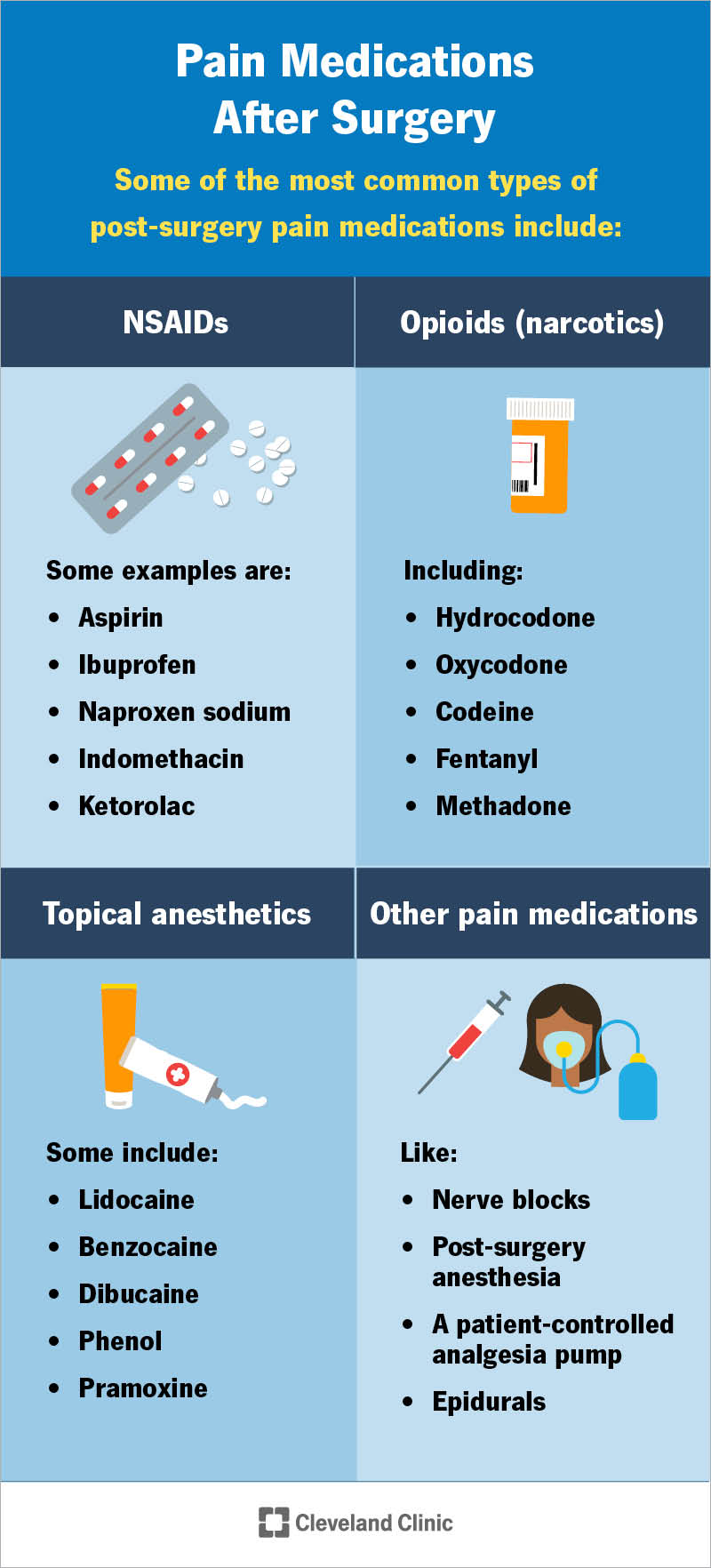
What Is the Best Painkiller for Post Surgery?
There’s not one medication that’s best for managing pain after a surgery. Learn about some of the most common options.
 my.clevelandclinic.org
From that site: Inform your doctors and nurses about:
- Any surgical pain you have had in the past.
- How you relieved your pain before you came to the hospital.
- Pain you have had recently or currently.
- Pain medications you have taken in the past and cannot tolerate.
- Pain medications you have been taking prior to surgery
- Any pain that is not controlled with your current pain medications.
- Help the doctors and nurses "measure" your pain, and expect staff to ask about pain relief often and to respond quickly when you do report pain.
- Ask for pain medicines as soon as pain begins.
- Tell us how well your pain is relieved and your pain relief expectations.
- Use other comfort measures for pain control -- listening to relaxation or soft music, repositioning in bed, etc.
Remember:
- Pain is different for everyone.
- Pain may be dull, stabbing, cramping, throbbing, constant, on and off, etc.
- Treating pain early usually brings quicker and better control.
- Healing occurs faster when pain is under control.
- Pain affects blood pressure, heart rate, appetite and general mood.
Last edited:
Bluebird
Well-known member
Well I ended up in the ER at 2 am this morning. Apparently I scared both my guys to the point where they called 911. A lot of changes came from that. I was released to see my surgeon, since that was already scheduled - so I’m writing this pretty exhausted at this point. Because I’m done with that visit as well.
They took some pictures of my abdomen and the healing/not healing that has happened.
I’m walking more than enough. I’m not sure why this keeps getting brought up, but I’m following the surgeon’s orders with that. I do laps around my house, and my house is spread out and long. Sometimes I even step down into the diamond shape there - that’s the sunroom. It’s got a step into and out of it so that is helping to strengthen things as well.

The only thing I haven’t been doing is lifting anything over 3 pounds, and I’m trying to limit sitting, which has been explained to me that would be difficult, more than once. I sit on the toilet (with a raised seat now) and the last couple of days I’ve been sitting at the dining room table but that’s been hurtful so it’s mostly reclined in bed at an angle. At night I am sleeping on my back, or on my side with the pregnancy U pillow as a prop.
I don’t care what other people have been told - I’m following what has been directed to me by my surgeon. Everyone is different. Just like with polyamory - trying to take a cookie-cutter approach isn’t going to get you happiness. What works for me or what is going on with me isn’t the standard. I’m not the poster child. If anyone is reading my journal and thinking that their own experiences will mirror mine, well, fucking don’t do that. I’d suggest reading everything you can and taking the aggregate into consideration, but my experiences are mine. My surgeon is happy with my activity level, I’m happy with it it, and I’m not going to do anything more with that, beyond what he suggests.
I’ve been using heating pads since before the surgery. I have a full-body pad and a medium size one. So I can wrap myself up as needed. This last week I have stopped because the loss of my ovaries has me having hot flashes and heat is not helpful! Instead I have a full-body cooling pad, two cooling pillows, a cooling u-shaped pregnancy pillow, and an actual small hysterectomy pillow that I use in the car and in bed when shifting. Also a wedge so I can recline somewhat upright without putting pressure on the incision.
My staples are now all gone and they said I did a really good job with those. That had me in tears because I’ve been so anxious and stressed. I didn’t get any steri-strips! He said everything is holding together on the outside so now we need to address what’s going on inside.
They stopped me from taking any more Advil. The 800 mg constant churn was too much and they now are having me take something to coat my stomach or soothe it some? I’ve been taking it for months leading up to the surgery and now every 8 hours it’s actually what is causing me pain right now. He said it was good that I was trying to cut it back but now he’s telling me no more, period. This is actually what the ER said as well. I went in because I was having gripping pains in my upper abdomen - like in my stomach - suddenly. It was different than what I had been experiencing when it comes to pain.
Apparently my sugar is high right now as well and I have a referral like I wanted to start seeing someone about getting back on track with that. My weight is just under 200 lbs so I haven’t gained anything.
At the ER, the doctor/nurse/whoever I was seeing there said my pictures were unclear and they weren’t an expert, but in her opinion my vaginal cuff was shifting and there was fluid. Also, along my right side was quite a bit of blood pooling inside. But she didn’t know if this was just post-surgical stuff and she was thinking of doing a speculum exam to check things out. However, since I was just about to see my surgeon this morning, she said I could just wait for him to make a decision.
Thank goodness because he said it’s too early for an internal exam like that. He did check the cuff with his fingers and he said in his opinion it’s healing nicely and is where it should be. The fluid is normal there. I’m not having any discharge and he’s going to see me in two weeks and at that time we will get a better look of things.
He went over my pathology report. He said a normal uterus is 75 grams and mine was almost 500. Everything was benign and everything is gone and I should be okay moving forward. He prescribed me estradiol pill to take once a day to help with hormones. He said in two weeks we can talk about that but to definitely call before then if I don’t like it.
While at the hospital, they gave me morphine and then as I was being discharged they offered me more! I was very unhappy with this though I did take the first shot into my IV because I was in much pain. It just made me feel glazed and I could still feel all of the pain. I told them I didn’t want more for the road because it wasn’t doing anything!
The surgeon prescribed me OxyCodone now and he said to take that with the Tylenol for the next few days. Hopefully the stomach pain is reduced since I won’t be taking ibuprofen anymore. My incision doesn’t have any pain right now though that may be because the stomach pain is so overwhelming.
As far as the right side of my body having so much pain and the film being inconclusive, he said he thinks it’s just regular post-surgical stuff and I shouldn’t stress it. It does look like I had internal bleeding there but it’s stopped. They’re going to keep an eye on it.
They took some pictures of my abdomen and the healing/not healing that has happened.
I’m walking more than enough. I’m not sure why this keeps getting brought up, but I’m following the surgeon’s orders with that. I do laps around my house, and my house is spread out and long. Sometimes I even step down into the diamond shape there - that’s the sunroom. It’s got a step into and out of it so that is helping to strengthen things as well.
The only thing I haven’t been doing is lifting anything over 3 pounds, and I’m trying to limit sitting, which has been explained to me that would be difficult, more than once. I sit on the toilet (with a raised seat now) and the last couple of days I’ve been sitting at the dining room table but that’s been hurtful so it’s mostly reclined in bed at an angle. At night I am sleeping on my back, or on my side with the pregnancy U pillow as a prop.
I don’t care what other people have been told - I’m following what has been directed to me by my surgeon. Everyone is different. Just like with polyamory - trying to take a cookie-cutter approach isn’t going to get you happiness. What works for me or what is going on with me isn’t the standard. I’m not the poster child. If anyone is reading my journal and thinking that their own experiences will mirror mine, well, fucking don’t do that. I’d suggest reading everything you can and taking the aggregate into consideration, but my experiences are mine. My surgeon is happy with my activity level, I’m happy with it it, and I’m not going to do anything more with that, beyond what he suggests.
I’ve been using heating pads since before the surgery. I have a full-body pad and a medium size one. So I can wrap myself up as needed. This last week I have stopped because the loss of my ovaries has me having hot flashes and heat is not helpful! Instead I have a full-body cooling pad, two cooling pillows, a cooling u-shaped pregnancy pillow, and an actual small hysterectomy pillow that I use in the car and in bed when shifting. Also a wedge so I can recline somewhat upright without putting pressure on the incision.
My staples are now all gone and they said I did a really good job with those. That had me in tears because I’ve been so anxious and stressed. I didn’t get any steri-strips! He said everything is holding together on the outside so now we need to address what’s going on inside.
They stopped me from taking any more Advil. The 800 mg constant churn was too much and they now are having me take something to coat my stomach or soothe it some? I’ve been taking it for months leading up to the surgery and now every 8 hours it’s actually what is causing me pain right now. He said it was good that I was trying to cut it back but now he’s telling me no more, period. This is actually what the ER said as well. I went in because I was having gripping pains in my upper abdomen - like in my stomach - suddenly. It was different than what I had been experiencing when it comes to pain.
Apparently my sugar is high right now as well and I have a referral like I wanted to start seeing someone about getting back on track with that. My weight is just under 200 lbs so I haven’t gained anything.
At the ER, the doctor/nurse/whoever I was seeing there said my pictures were unclear and they weren’t an expert, but in her opinion my vaginal cuff was shifting and there was fluid. Also, along my right side was quite a bit of blood pooling inside. But she didn’t know if this was just post-surgical stuff and she was thinking of doing a speculum exam to check things out. However, since I was just about to see my surgeon this morning, she said I could just wait for him to make a decision.
Thank goodness because he said it’s too early for an internal exam like that. He did check the cuff with his fingers and he said in his opinion it’s healing nicely and is where it should be. The fluid is normal there. I’m not having any discharge and he’s going to see me in two weeks and at that time we will get a better look of things.
He went over my pathology report. He said a normal uterus is 75 grams and mine was almost 500. Everything was benign and everything is gone and I should be okay moving forward. He prescribed me estradiol pill to take once a day to help with hormones. He said in two weeks we can talk about that but to definitely call before then if I don’t like it.
While at the hospital, they gave me morphine and then as I was being discharged they offered me more! I was very unhappy with this though I did take the first shot into my IV because I was in much pain. It just made me feel glazed and I could still feel all of the pain. I told them I didn’t want more for the road because it wasn’t doing anything!
The surgeon prescribed me OxyCodone now and he said to take that with the Tylenol for the next few days. Hopefully the stomach pain is reduced since I won’t be taking ibuprofen anymore. My incision doesn’t have any pain right now though that may be because the stomach pain is so overwhelming.
As far as the right side of my body having so much pain and the film being inconclusive, he said he thinks it’s just regular post-surgical stuff and I shouldn’t stress it. It does look like I had internal bleeding there but it’s stopped. They’re going to keep an eye on it.
Last edited:
So, the guys called 911, meaning you were in so much pain you needed to be carried out to an ambulance on a stretcher? Wow.
I am glad you got the care you needed, both at the ER and from your surgeon. It's great you had your staples taken out.
I did read that you were using cooling pillows and a cooling blanket. I didn't know if you were putting anything cold/cool on your belly though.
I am glad you're walking. (There was really no need to post your walking route, but whatever.) You hadn't mentioned walking since you got out of the hospital so I wasn't sure if the pain was preventing you from doing that.
And now you're off the ibuprofen, because apparently it was upsetting your stomach so much it was actually increasing your pain. You're on acetaminophen. And you're off tramadol and onto oxycodone now. I hope you spend a week taking your pain meds properly, facing your fear and doing it anyway.
Best wishes! I'm sorry it's been so tough.
I am glad you got the care you needed, both at the ER and from your surgeon. It's great you had your staples taken out.
I did read that you were using cooling pillows and a cooling blanket. I didn't know if you were putting anything cold/cool on your belly though.
I am glad you're walking. (There was really no need to post your walking route, but whatever.) You hadn't mentioned walking since you got out of the hospital so I wasn't sure if the pain was preventing you from doing that.
And now you're off the ibuprofen, because apparently it was upsetting your stomach so much it was actually increasing your pain. You're on acetaminophen. And you're off tramadol and onto oxycodone now. I hope you spend a week taking your pain meds properly, facing your fear and doing it anyway.
Best wishes! I'm sorry it's been so tough.
Bluebird
Well-known member
I have been taking my pain meds “properly.” They’re just not enough. Yes, the ibuprofen is tearing up my stomach. I’ve been taking too much, apparently. Even though it’s what they told me to do.  They told me I could shift the narcotic and decide when to take it, which I’ve done with not much improvement.
Last night was pretty good. The oxy didn’t zonk me out but it also didn’t take the pain away completely. I woke up at midnight, at 2 am and at 5 am to pee. However, the pain was definitely less.
I just ordered a bunch more enemas because I don’t think the Colace is really helping much - I’m tired of waiting and waiting and then getting cramps. I’m going to keep taking it and hope for the best, but I’m going to have the enemas standing by each evening! I take 2 Colace in the morning and two in the evening.
Right now my only regular pain pill is the Tylenol 1000 mg, which is what I’ve been taking regularly every 8 hours the last two weeks. I’m supposed to supplement with the oxy if needed. I’m trying to keep the oxy to just before bed but I will take it if needed during the day. It frightens me, but I’m following what my doctor has recommended.
Today I made my own breakfast - the first time in a long time. I let MisterMoonbeam sleep in! I had Greek yogurt, a cup of cubed watermelon and a granola bar. That’s 10 more carbs than I should have had, so I’m not starting out the day too well. I plan to have a salad for lunch so that should balance back out. It honestly would have been better if I chose a different type of Greek yogurt, but it was in the bottom drawer of the fridge so I grabbed the one on top.
I did get MisterMoonbeam up and I’m glad because he had a therapy appointment this morning. I did some bill paying and budgeting but didn’t finish because I got tired. Only a few things needed paid, and the rest I just made sure the money is in the account for when they go through electronically.
BugGirl should be by this evening to scoop cat litter and water plants. I didn’t schedule anyone to help out this weekend since it’s Father’s Day, so MisterMoonbeam will be back to scooping duty until Tuesday.
I want to swap my bedsheets today and maybe have one of the guys blow off the back deck so I can maybe get some outdoor time. The birdfeeders need filled so I am glad it is Spring!
They told me I could shift the narcotic and decide when to take it, which I’ve done with not much improvement.Last night was pretty good. The oxy didn’t zonk me out but it also didn’t take the pain away completely. I woke up at midnight, at 2 am and at 5 am to pee. However, the pain was definitely less.
I just ordered a bunch more enemas because I don’t think the Colace is really helping much - I’m tired of waiting and waiting and then getting cramps. I’m going to keep taking it and hope for the best, but I’m going to have the enemas standing by each evening! I take 2 Colace in the morning and two in the evening.
Right now my only regular pain pill is the Tylenol 1000 mg, which is what I’ve been taking regularly every 8 hours the last two weeks. I’m supposed to supplement with the oxy if needed. I’m trying to keep the oxy to just before bed but I will take it if needed during the day. It frightens me, but I’m following what my doctor has recommended.
Today I made my own breakfast - the first time in a long time. I let MisterMoonbeam sleep in! I had Greek yogurt, a cup of cubed watermelon and a granola bar. That’s 10 more carbs than I should have had, so I’m not starting out the day too well. I plan to have a salad for lunch so that should balance back out. It honestly would have been better if I chose a different type of Greek yogurt, but it was in the bottom drawer of the fridge so I grabbed the one on top.
I did get MisterMoonbeam up and I’m glad because he had a therapy appointment this morning. I did some bill paying and budgeting but didn’t finish because I got tired. Only a few things needed paid, and the rest I just made sure the money is in the account for when they go through electronically.
BugGirl should be by this evening to scoop cat litter and water plants. I didn’t schedule anyone to help out this weekend since it’s Father’s Day, so MisterMoonbeam will be back to scooping duty until Tuesday.
I want to swap my bedsheets today and maybe have one of the guys blow off the back deck so I can maybe get some outdoor time. The birdfeeders need filled so I am glad it is Spring!